
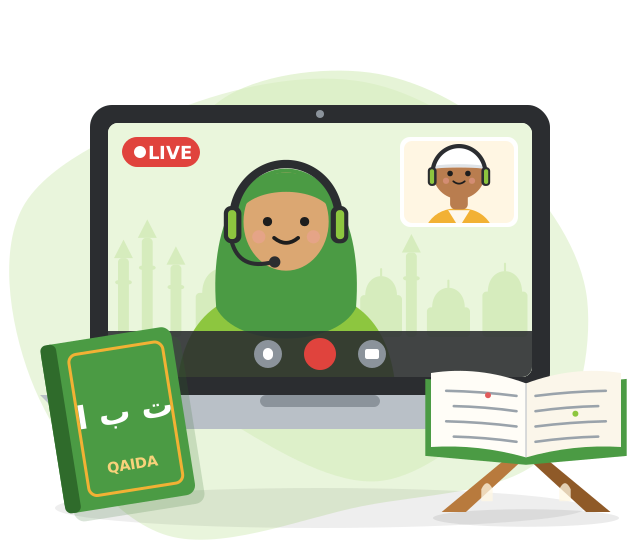
Thirty minutes can feel long to a young child. In an online Quran class for kids, the child sits at a screen. Home is full of things that call for attention. A few small habits help a lot. This guide shows what to do before, during and after the class.
Every child is different, so change one thing at a time. Nothing here is a test or a promise. It is a set of ideas that parents can try at home.
How Do I Keep My Child Focused in an Online Quran Class?
Get ready before class. Give a snack, a drink and a toilet trip, and let your child move. Set up a seat at a table, a screen at eye level and headphones. Sit near your child, but let the teacher lead. After class, read the teacher's note and practise a little the same day.
Here is the plan in three parts:
- Before class: food, water, a toilet trip and some movement.
- During class: a good seat, a clear screen, headphones and a parent close by.
- After class: the teacher's note, a short practice and a word of praise.
Before Class: Get the Body Ready
A hungry, thirsty or restless child finds it hard to focus. Do these things in the last few minutes before class:
- Snack and drink: give a light snack and a glass of water, so no one eats during the lesson.
- Toilet: a quick trip first, so your child does not have to leave halfway.
- Move: a run in the garden, a few jumps or a stretch uses up extra energy.
- Settle: put the toys away, sit down together and take a quiet minute before the call.
- Pick the hour: choose a time when your child is fresh. Classes run 24/7, and we set each class in your own time zone.
The Seat, the Screen and the Sound
Small changes to the room can make a big difference. Each row says what to set up, why it helps and an easy fix:
| Set up | Why it helps | Easy fix |
|---|---|---|
| Seat | A table and a chair help a child sit up and stay put. A bed or a sofa makes it easy to slump or roll. | Use a chair that fits. Put a box or a cushion under small feet. |
| Screen | A child who cannot see the page easily soon looks elsewhere. | Raise the device to eye level. Use a laptop or tablet if you can. Close other tabs and turn off alerts. |
| Headphones | Noise pulls a child away from the lesson. Headphones help children focus. | Pick headphones with a microphone built in. Do not use the laptop speaker. Test the sound in the first minute. |
| Light and camera | On camera, the teacher can see your child's mouth. That helps with hard letters. | Face a window or a lamp, and keep your child's face in the camera. |
| Space | Toys, a TV or a phone nearby call for attention. | Pick a quiet corner. Turn off the TV and put toys out of sight. |
Where Should a Parent Sit?
Parents may join any class. For a young child, a parent nearby is a big help. How you sit matters, so try this:
- Sit close enough to hear, and a little behind your child. Then your child looks at the teacher, not at you.
- Help with small things only. Offer a sip of water, point to the line, or give a quiet nudge to look at the page.
- Let your child answer. If you speak for your child, the teacher cannot hear your child's own sound.
- Keep your questions for the end. Write them down and ask the teacher after the class.
- Put your phone away. Your child copies what you do.
- Keep a calm face. A smile and a nod tell your child this is a safe place to try.
- Does your child need you less over time? Then move back a little more each week.
Short Breaks and Small Rewards
A 30-minute class is short, but it can feel long to a young child. In our classes, the teacher uses short tasks and lots of praise for young learners. At home, you can help in these ways:
- Put the breaks before and after class, not in the middle. Let your child play for a few minutes on each side.
- Practise in two short parts. Read for a few minutes, rest, then read again.
- Keep rewards small, and give them for a steady week, not for every page. A star on a chart is enough for many children.
- If your child needs a pause, tell the teacher. A tired child may do better with a shorter task.
After Class: Use the Teacher's Note
The teacher writes you a short note after every class. It lists what to practise. Read it the same day, while the lesson is fresh. Then do a little practice, so what your child learned does not fade.
Here are four steps:
- Ask first: "What did you learn today?" Then read the note together.
- Pick one small task from the note. One row of the reading book or one ayah is enough for a young child.
- Practise at a calm time, after a snack and a rest. Our daily Quran routine for kids after school shows how to fit it in.
- Tell the teacher what you saw. Say if the task was too hard, too easy or too long. Your child can colour a star on the free kids' Quran practice chart.
What You See, and What to Try
Use this table when something goes wrong. Change one thing at a time, then see if it helps:
| What you see | What may be behind it | What to try |
|---|---|---|
| Your child fidgets or keeps getting up | Extra energy, or a seat that is not comfortable. | Let your child move before class. Check the chair and the height of the screen. |
| Your child looks away from the screen | Noise, toys, or a screen that is hard to see. | Use headphones, clear the space and raise the screen to eye level. |
| Your child says "I'm bored" | The task may be too easy or too long. | Tell the teacher. A young child may need some games or a shorter task. |
| Your child goes quiet or says "I can't" | The task may be too hard, or your child may be shy. | Tell the teacher and ask for a smaller step. Praise every try. |
| Your child is tired or cross | A long day, or a class time that is too late. | Ask us about a fresher class time. |
Some days will still be hard. That is normal for a child. Stay calm, and keep the Quran a happy time.
When the Problem Is Not Focus
Sometimes a child loses focus because the class is not a good fit. Look for the pattern. Is it every class, or only some days? Is it one task, or all of them?
If it goes on for weeks, talk to us. Not the right teacher? Tell us, and you can ask for a different teacher. Please do not use the class as a punishment, or take it away as one. Keep it a happy time.
Try It in a Free Trial Class
A real class is the clearest test. Our first class is a free 30-minute trial. It is live and 1-on-1, with a male or a female teacher, and no card is needed. Classes run 24/7. We set each class in your own time zone, so you can pick an hour when your child is fresh.
Use the Book a Free Trial button above to pick a time. Want to see how it all works for children from age 4? Read about our online Quran classes for kids.