
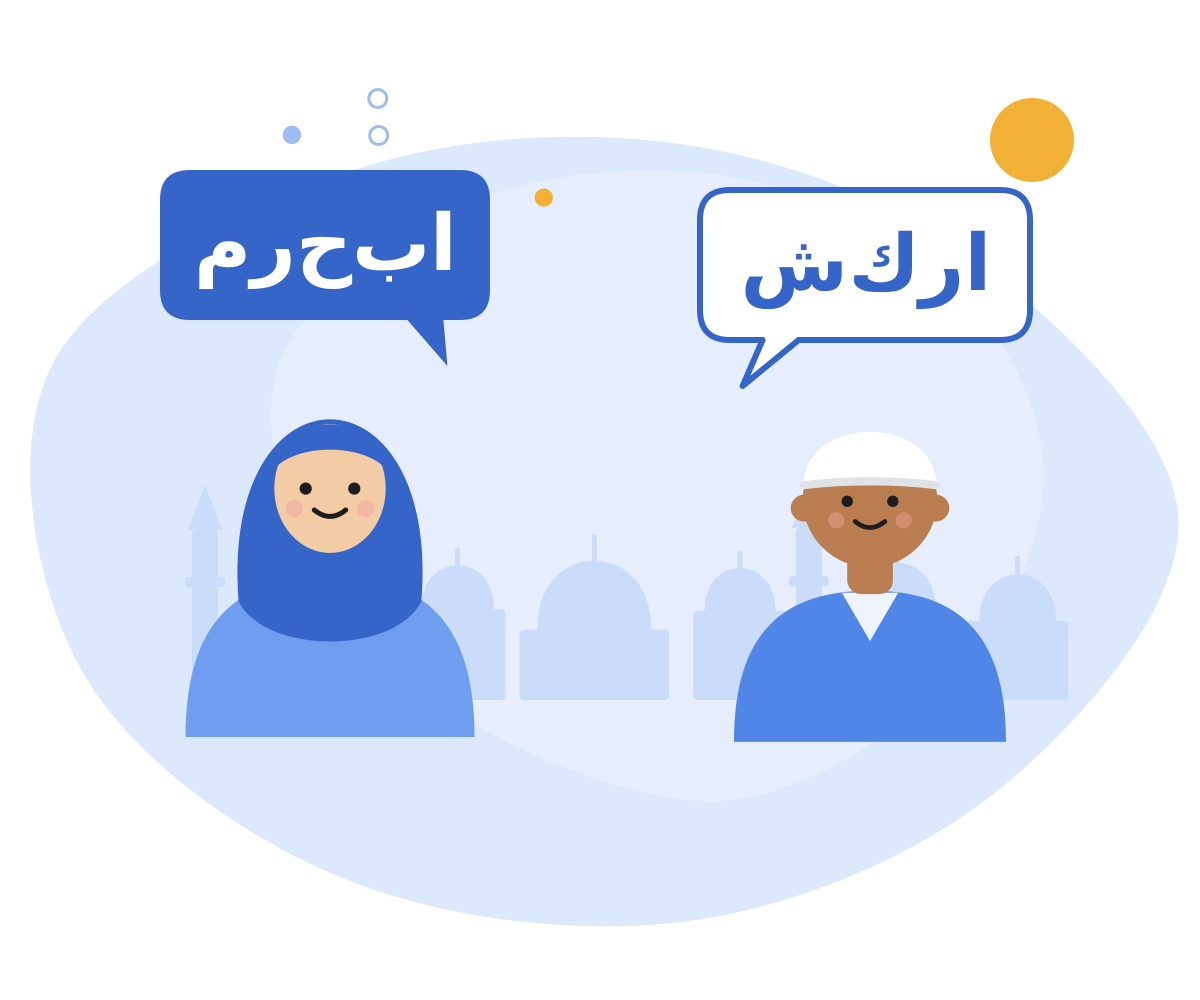
Sun and moon letters are 2 groups of Arabic letters. They tell you what to do with the 'l' in 'al', the Arabic word for 'the'. With a moon letter, you say the 'l'. With a sun letter, you skip the 'l' and say the next letter twice as strong.
There are 28 letters in the Arabic alphabet. Half are sun letters and half are moon letters. You hear this rule in almost every verse of the Quran. So once you know it, your reading gets smoother right away.
This guide is for kids, parents and adults who read the Quran. It keeps things short. You get the rule, both lists, a memory trick and real examples from surahs your child may already know.
What Are Sun and Moon Letters?
Many Arabic words start with 'al'. It is written with 2 letters: alif (ا) and lam (ل). It means 'the'. So 'kitab' is 'a book', and 'al-kitab' is 'the book'.
The letter that comes right after 'al' decides how you say it. If that letter is a moon letter, the lam stays clear. If it is a sun letter, the lam goes quiet and blends into the next letter.
In tajweed books, you will see these names: lam shamsiyah and lam qamariyah. Shamsiyah means 'of the sun'. Qamariyah means 'of the moon'. They are the same rule, just in Arabic.
What Is the Rule in One Line?
Here it is: with a sun letter, skip the 'l' and double the next letter. With a moon letter, say the 'l'.
Take 2 words. The first is 'ash-shams', which means 'the sun'. The 'l' is gone, and you hear a strong 'sh'. The second is 'al-qamar', which means 'the moon'. Here you hear the 'l' clearly.
You can also see the rule on the page. In most copies of the Quran, a sun letter after 'al' has a shaddah on it. A shaddah is a small mark like a 'w'. It means 'say this letter twice'. The lam before it has no mark at all. A moon letter does not get a shaddah. Its lam has a sukoon, a small round mark that means 'stop on this sound'.
Why Are They Called Sun and Moon Letters?
The names come from 2 words. The Arabic word for sun is 'shams'. It starts with sheen (ش), a sun letter. So you say 'ash-shams', not 'al-shams'.
The Arabic word for moon is 'qamar'. It starts with qaf (ق), a moon letter. So you say 'al-qamar', with a clear 'l'.
Each word shows its own rule. That makes the names easy to remember. Some teachers also say it like this: the sun is so bright it hides the 'l'. The moon is soft, so the 'l' can still be seen.
Which Are the 14 Sun Letters?
Most sun letters are made with the tip of the tongue near the front teeth. That is where the 'l' is made too. So the 'l' melts into them. Here they are:
- ت ta, ث tha, د dal, ذ dhal
- ر ra, ز zay, س seen, ش sheen
- ص sad, ض dad, ط ta (heavy), ظ dha (heavy)
- ل lam, ن noon
Which Are the 14 Moon Letters?
Moon letters are made in other parts of the mouth and throat. The 'l' does not get in their way, so you say it clearly. Here they are:
- ء hamza (alif), ب ba, ج jeem, ح ha (from the throat)
- خ kha, ع ayn, غ ghayn, ف fa
- ق qaf, ك kaf, م meem
- و waw, ه ha (soft), ي ya
What Do Sun and Moon Letters Look Like in Short Surahs?
The best practice is the Quran itself. These examples come from short surahs that many kids learn first. Read each one out loud. Listen for the 'l', or for the doubled letter.
Surah Al-Fatihah is a great place to start. 'Al-hamdu' has a moon letter (ح), so the 'l' is clear. 'Ar-Rahman' and 'ar-Raheem' have a sun letter (ر), so the 'l' is gone. 'Yawm ad-deen' has a sun letter (د). 'As-sirat' has a sun letter (ص). 'Al-mustaqeem' has a moon letter (م). The last word, 'ad-daalleen', has a sun letter (ض).
Surah An-Nas has both kinds. 'An-nas' has a sun letter (ن). 'Al-waswas' and 'al-khannas' have moon letters (و and خ). 'Al-jinnah' has a moon letter (ج).
Surah Al-Asr is short too. 'Al-insan' has a moon letter (alif). 'As-salihat' has a sun letter (ص). 'Bil-haqq' has a moon letter (ح). 'Bis-sabr' has a sun letter (ص).
In Surah Al-Ikhlas, look at 'Allahus-samad'. The 'l' of 'al' melts into the sun letter sad (ص). For more surahs to practice with, see our list of short surahs for kids.
Is There a Memory Trick for Kids?
Yes. Many teachers use one short Arabic phrase. It holds all 14 moon letters: 'ibghi hajjaka wa khaf aqeemah'. In Arabic it is written ابغ حجك وخف عقيمه. It roughly means 'seek your Hajj, and fear that it may not be accepted'.
If a letter is in that phrase, it is a moon letter. If it is not, it is a sun letter. So kids learn one phrase, not 2 lists.
For young kids, a picture helps more than a phrase. Draw a big sun and a big moon on 2 cards. Say a word with 'al' out loud. Your child holds up the sun if the 'l' is gone, or the moon if they hear it. It turns the rule into a game.
How Can You Teach Sun and Moon Letters at Home?
Here is a short plan that works for kids and for adults who are new to Arabic. Do one step a day, or one step a week. Go at your own speed.
- Step 1: Say 'ash-shams' and 'al-qamar' out loud. Talk about what you hear.
- Step 2: Learn the memory phrase for the 14 moon letters.
- Step 3: Open Surah Al-Fatihah. Point to each 'al' and say if it is sun or moon.
- Step 4: Look for the shaddah. Show how it sits on the letter after a quiet 'l'.
- Step 5: Read one short surah a day and listen for each 'al'.
What Are the Common Mistakes?
Most mistakes are small. But they change how a word sounds, so they are worth fixing early. Watch out for these:
Saying the 'l' before a sun letter. People say 'al-rahman' when it should be 'ar-rahman'. This is the most common one, mostly for new readers.
Forgetting to double the sun letter. Skipping the 'l' is only half the rule. The next letter needs a strong, double sound.
Dropping the 'l' before a moon letter. Some readers rush and say 'a-qamar'. The 'l' must be clear.
Mixing it up after 'wa' or 'bi'. In 'wal-asr' or 'bis-sabr', the alif is not said, but the rule still works. Look at the letter after the lam.
The best fix is a teacher who listens to you read. A good teacher can hear these slips at once. To see how this rule fits with the rest, read our guide to tajweed rules for beginners.
Where Should You Go Next?
Sun and moon letters are one of the first rules a new reader meets. If your child is still learning the letters, start with our Noorani Qaida course. It teaches the letters, their sounds and how they join.
If you want to know what the words mean, try our Quranic Arabic course. It is for people who did not grow up speaking Arabic. Every class at Salam Campus is live and 1-on-1. You can try a free 30-minute class first. For plans, see our fees page.